

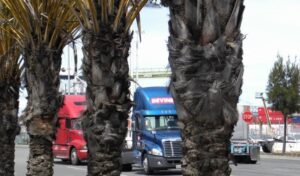
2,100,000 electric vehicle charging stations are needed to support California’s aggressive zero emission goals.

We do not frequently discuss California’s emission standards for cars, trucks and SUV’s. So, let’s do it….

In 2022, California Air Resources Board (CARB) passed the Advanced Clean Car II regulations. This rule established more stringent tailpipe emission standards as well as a timeline for the transition to zero emission vehicles (ZEV).

Beginning in 2026, 35% of the new cars, trucks and SUVs sold in California must be ZEV. This percentage increases 6-8% each year until it reaches 100% of vehicle sales in 2035.

To support the expected 7M electric cars on California’s roadways, we are going to need to up our charging game. This is where the charging demands come in.

By 2030, California will need 1M car chargers, which equates to an additional 129,000 chargers built and installed per year between now and then. By 2035, we will need 2.1M chargers, which equates to 221,000 per year between 2030 and 2035. As a frame of reference, last year, 17,000 car chargers were installed.

What is the cost of installing a charger in California? $122,000 – $440,000. Wow!

Latest News

UP AND DOWN

Cargo theft continues to be a big problem for the supply chain. According to Verisk CargoNet, while the quarterly incident count is down 26% year over year, the value of the thefts is on the rise, up 125%. Organized criminal networks are targeting high-value cargo....

KEEP ON TRUCKING

Happy National Truck Driver Appreciation Week! We thank all truck drivers including Orrin Asmus, who turned 94 last month, and is the oldest truck driver in the world. Appreciation week is September 13-19. Please thank a trucker!

ROUTE 66 TURNS 100

In 1926, the American Association of State Highway Officials and the Bureau of Public Roads adopted the uniform highway numbering system we know today. It took twelve years to finishing building the first coast to coast paved roadway, and it became the iconic Route...

CANADA IN CROSSHAIRS

There is relative stability on the tariff front. The International Emergency Economic Powers Act (IEEPA) tariff refunds are being processed. Twenty-fives states sued the Administration over the Section 310 (forced labor/unfair trading practices) tariffs claiming they...

NEWS FROM PANAMA

The on-going, El Niño induced, drought in Panama has resulted in increased restrictions in canal crossings. Effective September 3rd, the draft will be further restricted to 47.5 feet and vessel transits will be reduced to 9 in the Panamax lock and 25 in the original...

Share This