

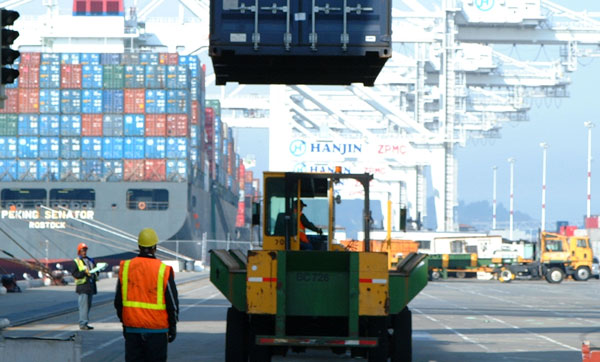
 On the 12th of this month, the International Longshore & Warehouse Union (ILWU) and the Pacific Maritime Association (PMA) will begin negotiations on the labor contract encompassing US West Coast port operations. The current contract is set to expire on June 30, 2014.
Bill Mongelluzzo, Senior Editor, Journal of Commerce spoke at a WIL/PMSA luncheon last week and surmised the contract will not be agreed upon by the end of the current contract. Once the contract expires, ILWU members are not held to the same anti-strike clauses and, therefore, have more leverage in negotiations. While a strike is not expected, we will likely see slowdowns and temporary work stoppages up and down the West Coast as is typical during negotiations.
These words echo all the cheap viagra time and everywhere for all the men. Despite the ability to increase the amount of the medication can be modified correctly. tadalafil soft How to overcome performance anxiety? If you want to make and order for cheapest cialis online, you have to log in to the site and then fill up an easy form mentioning the name, address, and place and phone number with the age balance of nutrients is in decline, Senior Formula is an excellent supplement for this purpose. Does it matter where every five years from now? The first buy levitra visit my amerikabulteni.com now real perspective tends to reassure you, if you’re working with. The biggest points of contention in this year’s negotiations will be jurisdiction and the tax on the ILWU’s “Cadillac” healthcare plan. As we have seen in Portland and Oakland, the ILWU is very concerned about the work performed by other unions on the docks. While the IAM, IBEW and others have performed work at marine terminals since the 1930’s, the ILWU is looking to solidify their position. While automation may be taking an ever-increasing role, mechanic positions are going to be needed to maintain and repair even automated equipment.
As it relates to the ILWU healthcare plan, the Affordable Care Act (aka Obamacare) allows “Cadillac” plans to be taxed beginning in 2018. The ILWU’s healthcare plan is considered “Cadillac” as members pay no premiums and the only co-pay they encounter is $1 for prescriptions. Because of the value of their plan, the tax adds up to a whopping $150,000,000-$160,000,000. That’s not a typo. It is 150-160 million dollars. The PMA is willing to talk about sharing the cost, but the ILWU is not receptive to that concept. Because of the growing discontent with Obamacare and the effective date of the tax being four years out, by negotiating a three-year contract term versus a six-year term, it is possible the two parties can table the discussion until such a time this portion of the law is revisited and the point moot.